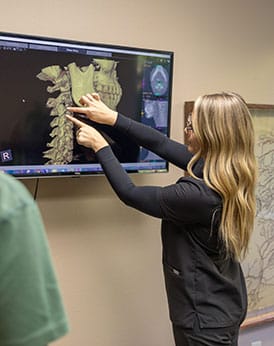

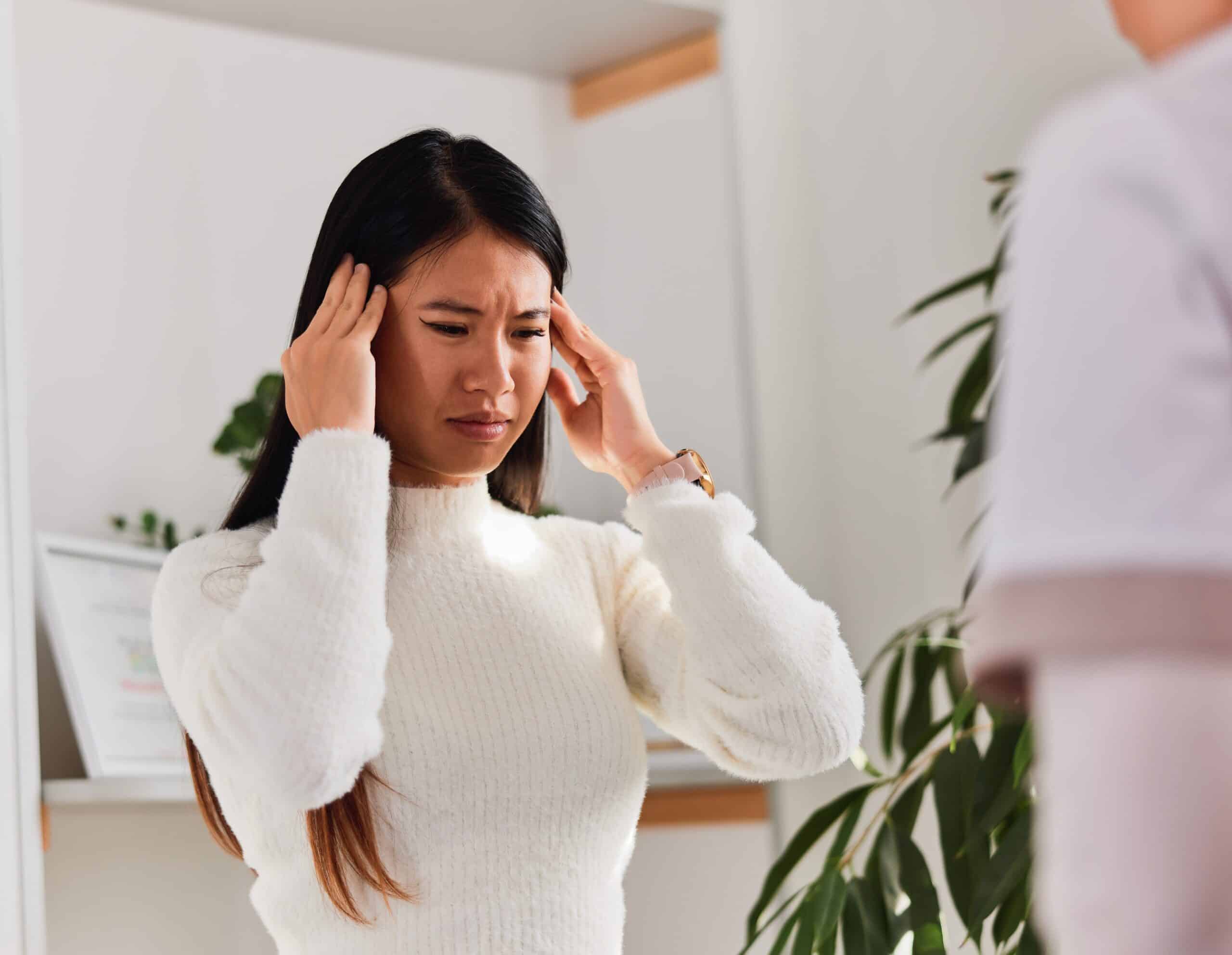
Who This Blog Is For: This is for people across San Diego — from Mission Valley and Mission Hills to Normal Heights, Kensington, and Serra Mesa — who keep getting a headache that starts at the base of the skull and have chalked it up to migraine. If your pain starts low, right where your head meets your neck, climbs up one side, or flares up when you turn your head, you’ve probably been told it’s “just a migraine.” If that pattern sounds familiar, but no one has ever actually looked at your neck, this blog is for you.
When your head hurts, where do you assume the problem is?
Naturally, most people point to their head. But what if that nagging pain starting low—right at the base of your skull—is actually a warning light flashing from your neck?
It’s an incredibly frustrating cycle. You’ve likely been handed a generic diagnosis like “migraines,” tried the usual medications or dark rooms, and yet the pain keeps coming back to that exact same spot. The exhausting part isn’t just the physical ache; it’s the underlying feeling that no one has truly explained why it’s happening.
The good news? Headaches centered in this specific region have highly recognizable origins. One of the most overlooked causes has very little to do with your head at all.
Table of Contents
Key Insights
- The Hidden Connection: Headaches starting at the base of the skull often originate in the neck, though the two are easily confused.
- Overlapping Symptoms: Conditions like cervicogenic headaches, tension headaches, and occipital nerve irritation share the exact same pain patterns as migraines.
- The Structural Root: The alignment of your upper neck—where your head balances on your spine—is a critical, frequently ignored contributor to chronic head pain.
- Listen to the Clues: If your pain is triggered by head movement or stays locked onto one side, your neck is likely the primary culprit.
What Does a Headache at the Base of the Skull Usually Mean?
Quick Answer: A headache at the base of the skull is frequently linked to mechanical issues in the neck. While conditions like cervicogenic headaches, tension headaches, and occipital nerve irritation are common medical diagnoses, the structural alignment of the upper neck is often the underlying variable keeping the cycle alive.
The base of the skull — the spot where your head meets your neck — is dense with pain-sensitive muscles, joints, and nerves. When pain concentrates there, several recognized conditions are worth having a physician evaluate.
- Cervicogenic Headaches: A “secondary” headache, meaning the pain is rooted in the neck but felt entirely in the head.
- Occipital Neuralgia: Irritation or compression of the occipital nerves that run from the neck up into the scalp.
- Tension-Type Headaches & Migraines: Both can center heavily in this region or cause severe, protective muscle guarding in the upper neck.
Because these conditions overlap so much, this specific type of headache is frequently misread.
Furthermore, there is a fundamental piece of the puzzle that often goes completely unchecked: the alignment of your upper neck. Your top two vertebrae carry the entire weight of your head (about the size and weight of a bowling ball).
When that delicate balance is thrown off, your body is forced to compensate. Muscles tighten, posture shifts, and the delicate nerves and blood vessels clustered at the base of your skull face constant strain.
Think of it in terms of sparks vs. sources. Spending hours staring at a computer screen, sleeping at an awkward angle, or carrying a heavy bag on one shoulder can easily spark an episode. But those are just triggers—they don’t explain why your body is vulnerable to them in the first place. To fix that, we have to look at the structural foundation.
Is It a Migraine or Something Coming From Your Neck?
Migraine and cervicogenic headaches can feel remarkably alike, which is why they’re so easily mixed up. However, if your symptoms are coming from a mechanical issue in your neck, you will usually notice a few distinct clues:
- Pain that flares up or worsens when you move or turn your head
- A noticeable reduction of range of motion
- One-sided pain that stays put rather than switching sides
True migraines are neurological events that more frequently bring secondary symptoms like nausea, auras, or extreme sensitivity to light and sound.
However, it’s incredibly common for a primary neck issue to trigger a migraine episode. If your pain reliably starts at the base of the skull, ruling the neck in or out is a vital first step toward recovery.
How Could the Top of Your Neck Be Driving Pain Into Your Head?
The uppermost vertebrae of your spine—known as C1 (the Atlas) and C2 (the Axis)—sit right where your skull meets your neck. The nerves in this specific area share communication pathways with the nerves responsible for carrying sensation to your face and head.
Because upper neck and head pain pathways overlap, pain from a neck disorder can sometimes be felt as a headache. This is called referred pain, and one example is cervicogenic headache.
When the alignment of these top vertebrae is even slightly off, the surrounding muscles stay in a state of chronic spasm to protect the spinal cord. Upper cervical care focuses exclusively on assessing and gently correcting this specific alignment. By restoring balance to the top of the spine, we take the pressure off the nervous system, giving your body the space it needs to heal.
What Can You Do About a Headache That Starts in Your Neck?
If you are dealing with persistent pain, start by keeping a simple log. Note when the pain shows up, whether specific head movements trigger it, and where it spreads. This information is incredibly valuable for your providers.
In your day-to-day routine, simple ergonomic shifts can make a big difference. Be mindful of your posture during long hours at your desk or during stop-and-go commutes on the 5 or the 805. Ensure your sleep setup keeps your neck in a neutral position.
But remember: if the pain keeps returning to that same spot despite all your stretches and lifestyle tweaks, it’s a clear sign that a deeper structural issue may be keeping the cycle alive.
Could an Upper Cervical Evaluation Pinpoint the Source?
If your headaches consistently start at the base of your skull and the usual approaches haven’t settled them, you may be a good candidate for an upper cervical evaluation at our San Diego chiropractic practice. It’s most relevant for people whose pain is provoked by neck movement, who feel tension where the head meets the neck, or who have a history of head or neck strain.
The evaluation is a careful, low-force assessment of how your head sits on your neck — for many people, the first time anyone has looked specifically at this connection as a possible source.
Ready for a Real Answer About Where Your Headaches Start?
You shouldn’t have to spend years managing “just migraines” when the true problem is a structural misalignment that can be corrected. You deserve a clear, precise explanation of why you are in pain.
At Upper Cervical Chiropractic San Diego, we help you determine if an upper neck misalignment is the true driver behind your headaches.
Take the first step toward lasting relief today.
Schedule a consultation with an upper cervical chiropractor in San Diego today!
Frequently Asked Questions
Where is the base of the skull, and why do headaches start there?
The base of the skull is where your head meets the top of your neck — a region packed with pain-sensitive muscles, joints, and nerves. That density is why it’s such a common place for head pain to begin, whether the source is the neck, the nerves, or a migraine.
Is a headache at the base of the skull serious?
Most aren’t dangerous. But a sudden, severe headache — or one with fever, a stiff neck, or new neurological symptoms — should be evaluated by a physician right away. For pain that simply keeps returning to that spot, it’s worth a proper assessment rather than guessing.
How do I know if it’s a migraine or a cervicogenic headache?
They overlap, so a physician makes the call — but a few clues lean toward the neck: pain triggered by head movement, a stiff or limited neck, and one-sided pain that doesn’t switch sides. Migraine more often brings nausea, aura, or strong light sensitivity.
Can a problem in my neck really cause headaches?
Yes. Nerves in the upper neck share pathways with those carrying sensation from the head, so neck pain can be felt as a headache — known as referred pain. It’s a key reason neck-origin headaches get mistaken for something else.
When should I see a doctor about it?
If the pain is new, intensifying, frequent, or paired with other symptoms, see your physician so the recognized causes can be evaluated and anything urgent ruled out.
To schedule a consultation with Upper Cervical Chiropractic San Diego, call 858-434-5926 or just click the button below.

If you are outside of the local area you can find an Upper Cervical Doctor near you at www.uppercervicalawareness.com.
About the Author